
The Outlaw Doesn’t Stay
I’m still here

In books, podcasts, conversations—different words, same feeling.
I keep hearing something I’ve been trying to say myself.
And whenever I hear it discussed, it makes me uneasy, like I already know where it leads.
It ties into the Outlaw.
I felt it again listening to Paul Kingsnorth’s Against the Machine. Not just in the book’s argument, but in its tone.
This insidious, persuasive, recognizable prompt:
Something is wrong here. Distrust this situation. You’d be better off starting over, on your own.
I used to follow that voice, even after it got me stranded, broke, hungry, and depressed.
The Outlaw, as I’ve come to understand it, isn’t just some character framework.
It’s a reflex.
It’s a chain reaction that begins in the body-mind when something feels intolerable—when authority (real or imagined) presses too hard, or stops making sense. It says:
Leave. Start over. Survive on your own terms.
And sometimes that instinct is necessary.
It can tell the truth when incoming news only confuses and bewilders. But, it only knows one impulse: Go. . . immediately!
To be clear, I’ve never built a bunker or stockpiled cans of Dinty Moore.
But I used to tell Natasha that it felt like I was behind a thick piece of glass, that others could need me, or I them, and we could both reach, yet be unable to touch. I kept an imaginary escape hatch that allowed me my own quiet distance. What others may have sensed as aloof, cold, or insensitive, was how I resisted being shaped by anything outside myself. Some other version of life, one that would finally satisfy my “dreams,” was just another day out, and today was to be endured until then.
It’s a stance, a posture you know if you’ve ever been addicted.
Breaking the rules becomes a given, and that relegates you always just outside the main, the center, the group.
You sense that you’re already apart from things, already operating by a different code. When it isn’t frustrating and lonesome, it can be exciting and galvanizing.
For me, it became an attitude:
always ready to go.
A few days ago, my daughter dropped my phone in the toilet.
It worked for a while, then the screen fucked up, went white and has been submerged in Jasmine rice since. Once I stopped reaching for my empty pocket, that old outlaw-prompt came back.
You don’t need a new one. No one does. Others would go without, but they just don’t have the courage to let go. They’re afraid of the uncertainty. But you aren’t. You can show them.
It always sounds reasonable. It also sounds signature, like it belongs on my profile. But it’s never really about a phone, or a bill, or whatever.
It’s the symbol of a wish, a fantasy, a dream where I enduring discomfort earns dropping out, disconnecting. And in those moments I can only vaguely sense that I’d be making a decision alone that would cost the collective, those who in some measure, depend on me (i.e. Natasha, the kids, my friends in and out of recovery.)
Distance does not guarantee clarity. There is no perfectly clean edge on which amore authentic life can begin, no erasure. We bring the past with us, along with our habits and point of view. There’s no life without impact or imprint. There’s no rebirth without relationship.
I’ve tried to do the same thing to find a creative path. I thought I could start fresh, reinvent, find some form that finally fits, and even there, nothing could begin from nothing. Every space I entered, I changed in some way, and just as I changed those spaces, they changed me.
This week I’ve been experimenting more with these portraits. When I push for the highest detail, its often an effort to impress, and the result can feel lifeless, protected, stiff. If I let myself get distracted by my insecurities, I lose the essence of the subject, without which, there’s nothing to hold a recognizable pattern.
A face comes into focus and something intangible and ineffable shifts when the relationships are right.
It’s the moment when the person says:
Yes. That’s me.
In that sense, it shouldn’t be completely figured out, shouldn’t be the whole story.
Just something true enough to stand still for.
I’ve been calling these large-format, realistic, graphite portraits Marks of Transformation.
But lately I’ve been thinking of them more simply as this:
I’m still here.
I’m not gone, or reset, or elsewhere, starting over. I remain. . . inside the life that changed me.
We need to be outlaws sometimes if we are to know when it’s time to say: this isn’t right. I don’t want to lose my sensitivity or resistance to when things become mechanical, hollow, or especially unjust. But if we live there, we forfeit half of our experience. Because lasting change doesn’t happen on the run. It happens in staying. In being seen. In allowing ourselves to exist in relation to other people, even when it’s hard.
I think it’s as true in making art as it is in recovery.
Here are a couple recent pieces:
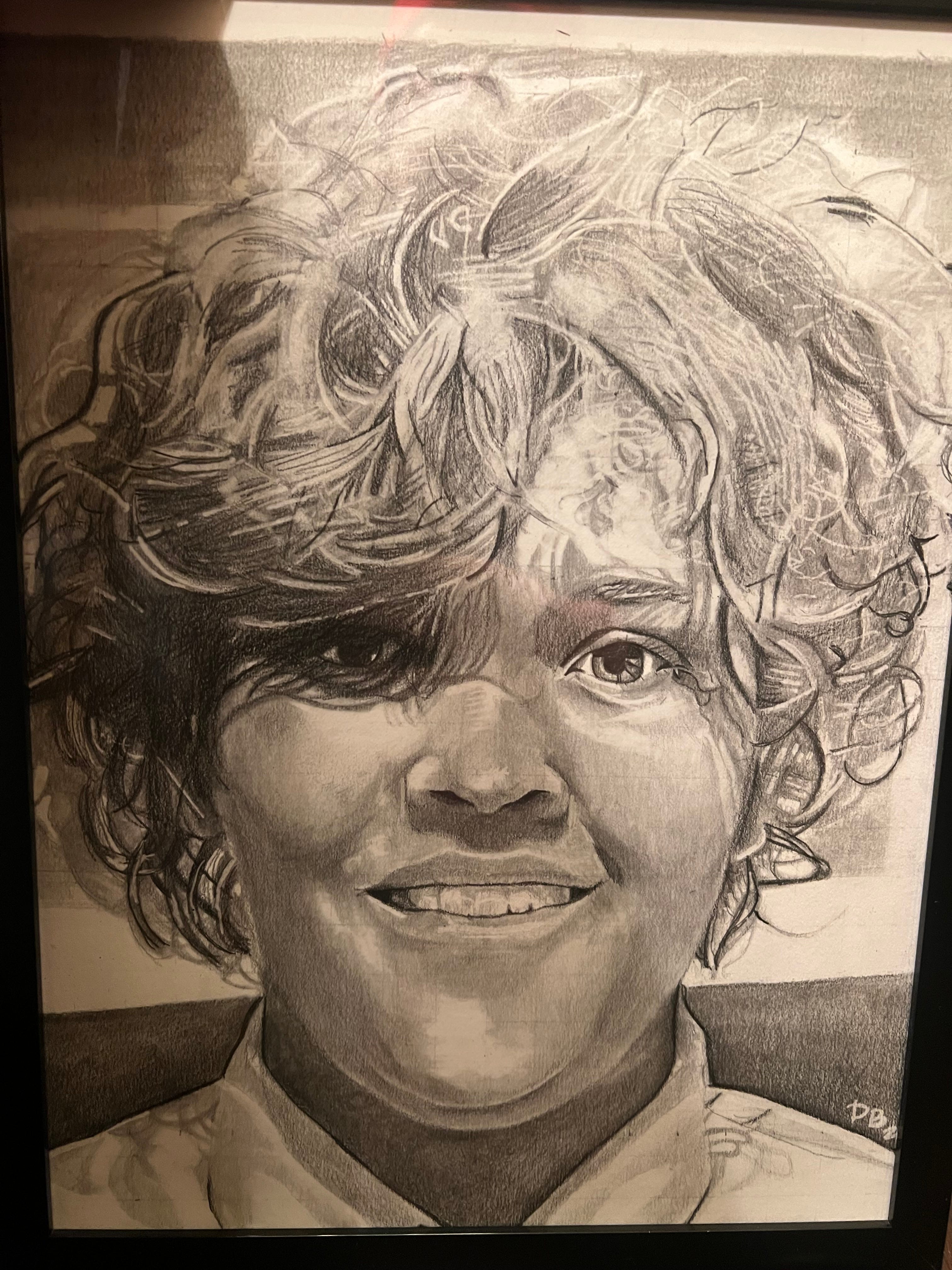
[“Stellan” Graphite on 9x12” - 120gsm Medium Tooth paper]
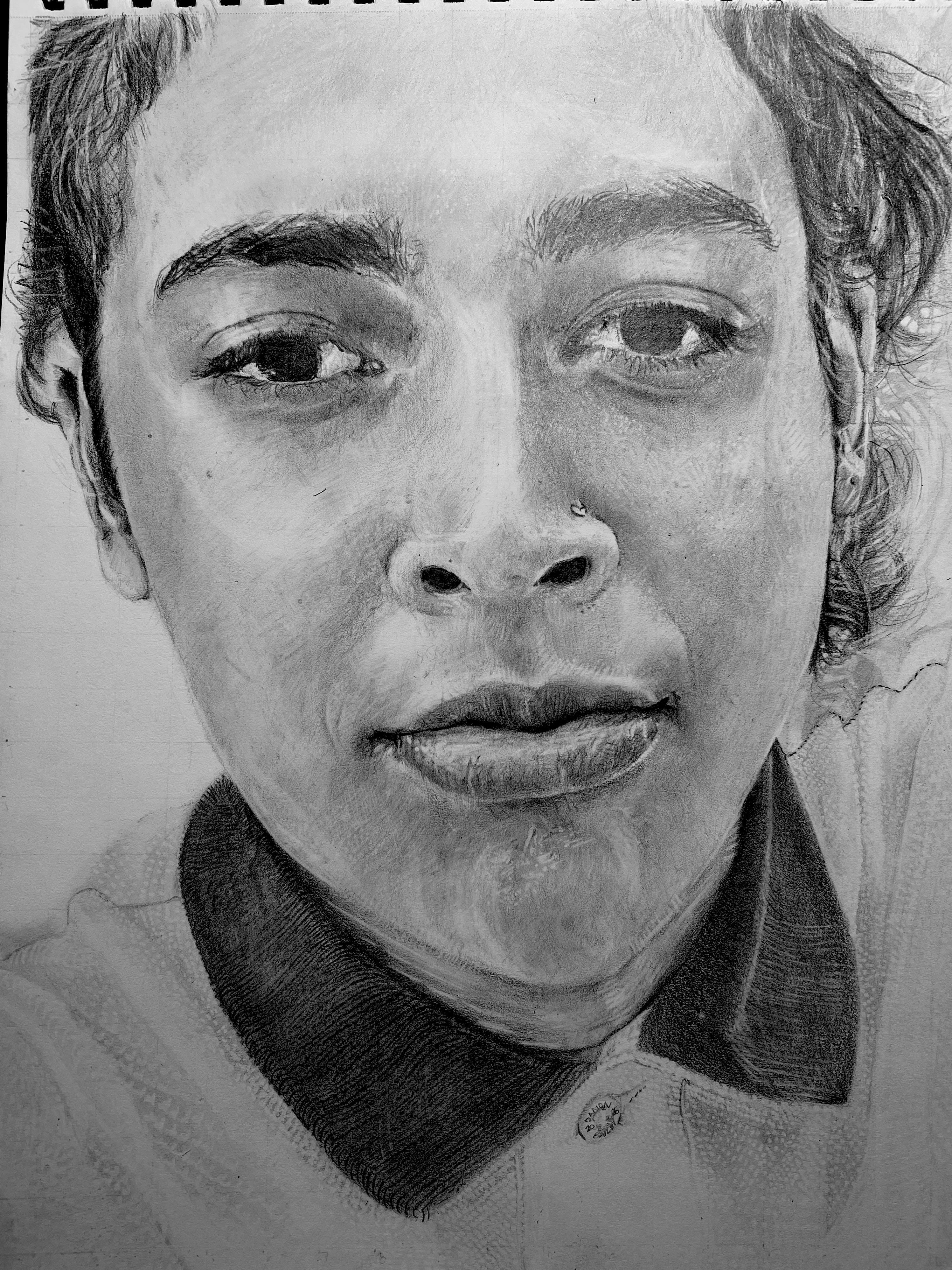
[“Ayriss” - Graphite on 9x12” 120 gsm Medium Tooth - My first attempt at skin texture as hyper-realism]
I have a couple of spots open this month for this kind of work.
If you have a photo that holds a moment like that—something that says I’m still here—I’m happy to take a look.
LINK: Outlaw drops in popular discussions:
Author, Wright Thompson, talks about his book, The Barn, and “something fundamental at the core of American identity.”
<iframe width=”560” height=”315” src=”
title=”YouTube video player” frameborder=”0” allow=”accelerometer; autoplay; clipboard-write; encrypted-media; gyroscope; picture-in-picture; web-share” referrerpolicy=”strict-origin-when-cross-origin” allowfullscreen></iframe>